
Facing an Intensive Outpatient Program for substance abuse can feel overwhelming, especially for American adults navigating the options in Los Angeles County. Nearly one in ten American adults struggles with a substance use disorder, highlighting how common these challenges have become. Understanding how to assess your readiness, gather needed resources, and set realistic goals can make this process less daunting. You will find helpful guidance here to clarify what to expect and how to prepare effectively for a meaningful recovery journey.
Table of Contents
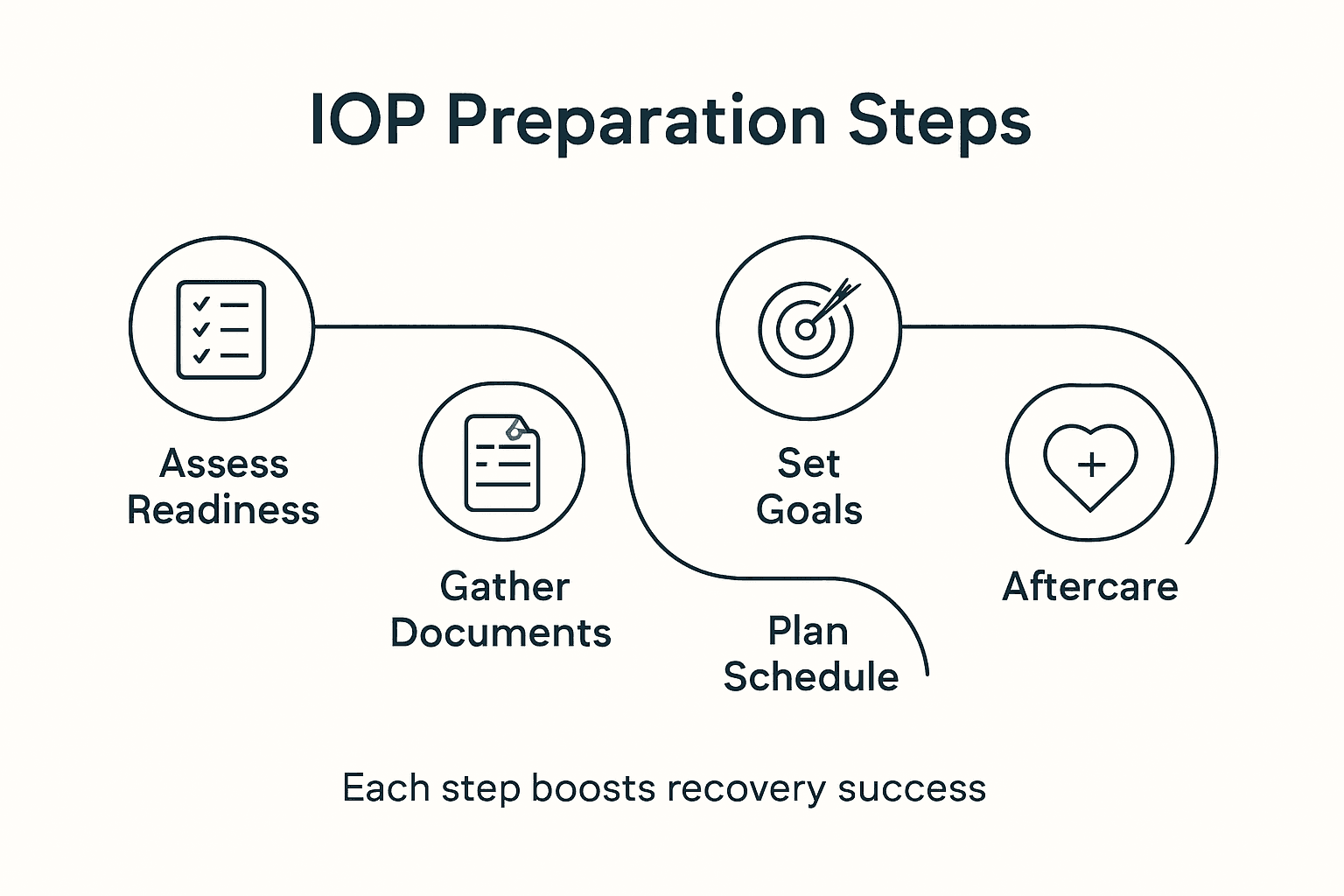
- Step 1: Assess Personal Readiness And Eligibility For IOP
- Step 2: Gather Essential Documents And Support Resources
- Step 3: Establish A Flexible Schedule For Treatment Sessions
- Step 4: Set Realistic Recovery Goals And Coping Strategies
- Step 5: Verify Progress And Follow Through With Aftercare Plans
Quick Summary
| Key Insight | Explanation |
|---|---|
| 1. Assess Your Readiness for IOP | Conduct a comprehensive self-evaluation to confirm your suitability for Intensive Outpatient Program treatment. Familiarize yourself with your substance use patterns and mental health status. |
| 2. Gather Necessary Documentation | Compile essential documents such as identification, medical history, and medication lists for your treatment evaluation and planning. This preparation eases the admission process. |
| 3. Create a Flexible Treatment Schedule | Establish a treatment schedule that aligns with personal responsibilities. Explore options for in-person or virtual sessions tailored to your commitments. |
| 4. Set Achievable Recovery Goals | Collaborate with your treatment team to establish specific, measurable recovery goals and develop coping strategies that cater to your unique needs. |
| 5. Plan for Aftercare Support | Design a comprehensive aftercare plan, including ongoing therapy and support groups, to ensure sustained recovery and accountability post-IOP. |
Step 1: Assess personal readiness and eligibility for IOP
Preparing for an Intensive Outpatient Program (IOP) requires honest self evaluation and understanding of your treatment needs. Your commitment and willingness to engage will significantly impact your recovery journey.
The initial assessment involves a comprehensive screening process designed to determine your suitability for IOP treatment. SAMHSA guidance emphasizes evaluating the severity of substance use disorders, focusing on several critical factors. First, professionals will assess your current substance use patterns, mental health status, and overall stability. They want to confirm you can safely participate in outpatient care without requiring more intensive residential treatment.
During the eligibility screening, expect questions about your living environment, support system, withdrawal risks, and personal motivation. The treatment team will want to understand your readiness to attend structured therapy sessions consistently and your genuine commitment to recovery. Be prepared to discuss your medical history, previous treatment experiences, and specific goals for rehabilitation. Your transparency during this process helps clinicians design a personalized treatment plan that addresses your unique needs.
Pro Tip: Bring detailed medical records and be completely honest during your initial assessment to ensure you receive the most appropriate level of care.
Step 2: Gather essential documents and support resources
Successfully preparing for an Intensive Outpatient Program (IOP) requires collecting the right documentation and establishing a robust support network. Your thorough preparation will help streamline your admission process and set a strong foundation for recovery.

Comprehensive preparation involves assembling critical personal and medical documents that treatment professionals will need to evaluate your specific needs. Start by gathering key items such as a valid government issued photo identification, health insurance cards, medical history records, current medication lists, and contact information for your primary care physician and any previous mental health providers. These documents provide treatment teams with essential insights into your medical background and help them design a personalized recovery plan.
Beyond paperwork, building a support system is equally important. Reach out to trusted family members or friends who can offer emotional support during your treatment journey. Consider connecting with local support groups, exploring community resources, and identifying potential peer support networks. Many treatment centers offer educational workshops and additional guidance to help you navigate this process. The goal is to create a comprehensive support ecosystem that reinforces your commitment to recovery and provides multiple layers of assistance.
Pro Tip: Make digital and physical copies of all important documents and store them in a secure location where you can easily access them during your IOP intake process.
Here is a quick overview of common documents and support resources needed for IOP preparation:
| Document Type | Purpose | Who May Provide It |
|---|---|---|
| Photo Identification | Confirms identity for admission | Government agency |
| Health Insurance Card | Verifies coverage for treatment | Insurance company |
| Medical History Records | Provides background for clinical planning | Primary care physician |
| Medication List | Ensures accurate medication management | Pharmacy or doctor |
| Provider Contact Information | Enables coordination of medical care | Previous care providers |
| Support Network List | Offers emotional and practical assistance | Family, friends, support groups |
Step 3: Establish a flexible schedule for treatment sessions
Successfully managing your Intensive Outpatient Program (IOP) begins with creating a realistic and adaptable treatment schedule that integrates seamlessly with your existing personal and professional commitments. Your ability to consistently attend sessions while maintaining your daily responsibilities is crucial for effective recovery.
Many treatment centers recognize the diverse needs of participants and offer flexible treatment options to accommodate different lifestyles. Consider exploring morning, evening, and weekend session timings that align with your work schedule, family obligations, and personal energy levels. Some programs provide virtual options that can further enhance your scheduling flexibility, allowing you to participate in therapy sessions from the comfort of your home or during breaks in your workday.
When developing your treatment schedule, communicate openly with your treatment coordinator about your specific time constraints and preferences. Be honest about potential challenges that might interrupt your attendance and work collaboratively to design a plan that maximizes your engagement. This might involve alternating between in person and telehealth sessions or selecting specific time slots that minimize potential conflicts. Remember that consistency is key in your recovery journey.
Pro Tip: Use a digital calendar or scheduling app to set reminders for your IOP sessions and create buffer time around each appointment to reduce stress and ensure timely participation.
Compare key features of in-person and virtual IOP scheduling options:
| Scheduling Approach | Flexibility Level | Setting | Ideal For |
|---|---|---|---|
| In-person | Moderate | At treatment facility | Those needing close oversight |
| Virtual | High | Home or remote sites | Individuals needing remote access |
| Hybrid | Maximum | Both facility and remote | Busy professionals, caregivers |
Step 4: Set realistic recovery goals and coping strategies
Successfully navigating recovery requires thoughtful goal setting and developing practical strategies that support your long term healing journey. Your approach should be collaborative and personalized to ensure meaningful progress and sustainable results.
Treatment centers prioritize setting individual recovery goals through collaborative planning with clinical staff, focusing on comprehensive objectives that extend beyond simple abstinence. Typical goals might include improving daily functioning, addressing underlying mental health challenges, rebuilding personal relationships, and developing robust coping mechanisms. Work closely with your treatment team to create specific measurable goals that feel achievable and meaningful to your unique circumstances.
Developing effective coping strategies involves learning practical skills to manage stress triggers and emotional challenges. This might include cognitive behavioral techniques, mindfulness practices, stress management exercises, and building a supportive peer network. Mastering healthy coping skills at rehab centers can provide structured approaches to emotional regulation and resilience. Consider exploring different techniques during your IOP sessions and be open to adapting strategies that resonate most strongly with your personal experience.
Pro Tip: Break down your recovery goals into small actionable steps and celebrate each milestone to maintain motivation and build confidence in your healing journey.
Step 5: Verify progress and follow through with aftercare plans
The final stage of your Intensive Outpatient Program (IOP) journey involves carefully monitoring your recovery progress and establishing a comprehensive aftercare strategy that supports your long term wellness. This critical phase ensures you have continuous support and accountability as you transition back into everyday life.
Effective aftercare planning secures ongoing progress by integrating regular therapy sessions and structured relapse prevention strategies. Work closely with your treatment team to develop a personalized plan that includes consistent check ins, ongoing therapy sessions, participation in support groups, and clear mechanisms for tracking your emotional and behavioral health. These plans are dynamic and should be regularly reviewed and adjusted based on your evolving needs and personal growth.
Why aftercare matters in addiction recovery success cannot be overstated. Your aftercare plan might include continued individual counseling, group therapy participation, medication management if applicable, family support sessions, and identifying potential triggers or high risk situations. Regular self assessment and open communication with your support network will help you maintain the progress you have achieved during your IOP and continue building a strong foundation for long term recovery.
Pro Tip: Schedule monthly progress reviews with your primary therapist and create a personal accountability journal to track your emotional milestones and challenges.
Prepare for Success with Glendora Recovery Center
Getting ready for an Intensive Outpatient Program can feel overwhelming as you assess your readiness, gather critical documents, and build a flexible schedule that fits your life. The article highlights the importance of honest self-evaluation, setting realistic recovery goals, and establishing strong coping strategies to overcome challenges on this journey. You may worry about balancing treatment with daily responsibilities or finding a program that truly adapts to your unique needs.
At Glendora Recovery Center, we understand these concerns and provide personalized Intensive Outpatient Programs with flexible scheduling options including morning, evening, weekend, and telehealth sessions. Our compassionate team specializes in treating substance abuse and co-occurring disorders while guiding you through every step from initial assessment to aftercare planning. Start building your strong foundation for lasting recovery today by reaching out to our experts.
Ready to take the first step toward a manageable and effective treatment plan? Contact us now to explore how our dedicated Intensive Outpatient Programs can help you achieve your recovery goals with confidence. Visit Glendora Recovery Center Contact Page to begin your journey.
Frequently Asked Questions
What documents do I need to prepare for IOP?
You will need a valid government-issued photo identification, health insurance card, medical history records, a current medication list, and contact information for your healthcare providers. Gather these documents to ensure a smooth admission process for your Intensive Outpatient Program.
How do I assess my readiness for IOP?
Assessing your readiness involves evaluating your current substance use patterns, mental health status, and motivation for treatment. Take time for self-reflection and consider discussing your situation with a trusted friend or mental health professional to gain clarity.
How can I create a support network for my recovery?
To create a support network, reach out to trusted family and friends who can provide emotional support. Additionally, look for local support groups and community resources that align with your recovery goals; aim to connect with at least two to three supportive individuals or groups before starting your IOP.
What should I include in my treatment schedule for IOP?
Include a mix of therapy sessions that fit your personal and professional commitments, such as morning, evening, or weekend options. Communicate with your treatment coordinator about your availability and adjust your schedule as needed to maintain consistency in your attendance.
How do I set realistic recovery goals during IOP?
Set realistic recovery goals by collaborating with your treatment team to establish specific, measurable objectives that go beyond abstinence. Break these goals down into smaller, actionable steps to help you track your progress easily and celebrate milestones along the way.
What aftercare plans should I consider after completing IOP?
Consider aftercare plans that include ongoing therapy, support group participation, and relapse prevention strategies. Schedule monthly check-ins with your therapist and involve your support network to help maintain your progress and address any emerging challenges.