
Over 18 million American adults struggle with alcohol use disorder, yet many loved ones neglect their own emotional health while trying to help. Supporting someone with addiction often means ignoring personal limits or feeling guilty for setting boundaries. Learning to prioritize your needs while still offering care is challenging but essential. In the following guide, you will find practical steps to assess your limits, communicate clearly, and protect your wellbeing when dealing with an alcoholic.
Table of Contents
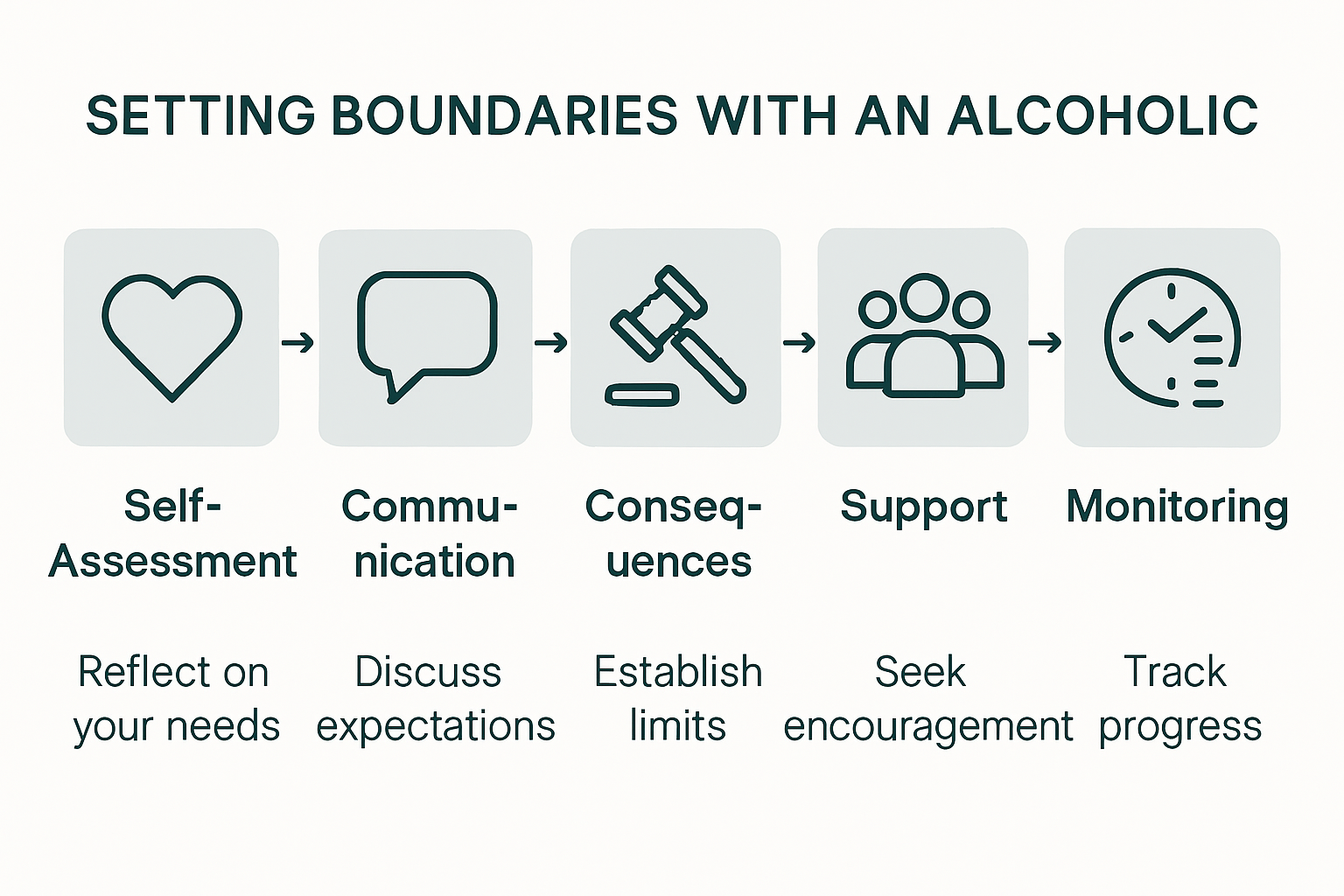
- Step 1: Assess Your Needs and Emotional Limits
- Step 2: Communicate Boundaries Clearly and Calmly
- Step 3: Establish Consequences and Consistency
- Step 4: Seek Support and Professional Guidance
- Step 5: Monitor Progress and Adjust Boundaries
Quick Summary
| Essential Insight | Clarification |
|---|---|
| 1. Assess Your Emotional Limits | Understand your personal boundaries when supporting someone with addiction to maintain your mental health. |
| 2. Communicate Boundaries Clearly | Use firm yet respectful language to express your boundaries without blame or accusation, focusing on your feelings. |
| 3. Establish Consistently Enforced Consequences | Set clear, enforceable consequences for boundary violations to ensure your emotional safety and stability. |
| 4. Seek Support and Professional Guidance | Engage with support groups and counselors to strengthen your coping strategies and emotional resilience. |
| 5. Monitor and Adjust Boundaries | Regularly evaluate and modify your boundaries based on the alcoholic’s behavior and your emotional well-being to achieve positive change. |
Step 1: Assess Your Needs and Emotional Limits
Learning to set boundaries with an alcoholic starts with understanding your own emotional landscape and personal limits. When supporting someone struggling with addiction, you must recognize your capacity for support without sacrificing your mental health.
Beginning this process requires honest self reflection. Emotional boundaries are critical when supporting a loved one with addiction, which means identifying what behaviors you can and cannot tolerate. Start by creating a personal inventory of your emotional triggers. Ask yourself: What interactions drain my energy? When do I feel overwhelmed? Where do I start feeling resentful or anxious?
A practical approach involves writing down specific scenarios that cause you distress. For example, if your loved one becomes verbally aggressive when drinking, note that as a clear boundary violation. Your goal is not to control the alcoholic but to protect your own emotional wellbeing. This might mean establishing consequences like leaving the room, ending a conversation, or temporarily limiting contact if destructive patterns emerge.
Warning: Setting boundaries is challenging. The alcoholic might resist or become defensive. Stay calm and consistent. Your emotional health matters most.
Step 2: Communicate Boundaries Clearly and Calmly
You are about to master the critical skill of communicating boundaries with an alcoholic in a way that protects both your relationship and your emotional wellbeing. This step requires courage, clarity, and compassionate directness.
When establishing boundaries, language matters immensely. Effective boundary communication involves speaking with firm yet respectful language, which means avoiding accusatory statements and focusing on your feelings and experiences. Instead of saying “You always drink and ruin everything,” try “When you drink, I feel unsafe and unable to trust you.” This approach shifts the conversation from blame to personal impact.
Practical communication requires specific examples and clear consequences. If your boundary involves not allowing alcohol in your home, explain exactly what that means. For instance, “If alcohol is brought into our shared space, I will ask you to leave immediately.” Be prepared to follow through consistently. Your words must match your actions. Practice delivering these statements with a calm tone soft voice and steady eye contact. The goal is not to attack but to create understanding.
Warning: The alcoholic may become defensive or manipulative. Stay grounded in your truth. Your boundaries are about self protection not punishment. Remember that you cannot control their reaction only your response.
Step 3: Establish Consequences and Consistency
You are about to learn how to create meaningful boundaries that actually work by establishing clear consequences and maintaining unwavering consistency. This step transforms boundaries from mere suggestions into real protective mechanisms for your emotional health.

Creating firm boundaries means developing consequences that are both predictable and enforceable. Start by identifying specific behaviors that violate your established boundaries. For instance, if your boundary involves no drinking in the house, a clear consequence might be asking the person to leave immediately or temporarily withdrawing financial or emotional support. The key is matching the consequence directly to the boundary violation.
Consistency is your most powerful tool. When you set a boundary, you must follow through every single time without exception. Alcoholics often test limits to see if you will actually enforce consequences. If you waver even once, you signal that your boundaries are negotiable. This means if you say you will ask someone to leave after drinking, you must do so every single time. Practice saying these consequences out loud to build your confidence and resolve.
Warning: Establishing consequences can feel uncomfortable and may trigger emotional manipulation or anger from the alcoholic. Stay calm and remember that your safety and well being are the priority. You are not being cruel you are being necessary.
Step 4: Seek Support and Professional Guidance
You are about to learn how to build a robust support network that will help you navigate the challenging journey of supporting an alcoholic while protecting your own mental and emotional health. This step is about recognizing you do not have to face this struggle alone.
Professional guidance and support groups are critical resources for families dealing with addiction, offering strategies, emotional validation, and practical tools. Start by exploring support groups like Al-Anon, which provide safe spaces to share experiences with others who understand your unique challenges. These groups offer more than sympathy they provide actionable coping mechanisms and emotional resilience training specifically designed for families of alcoholics.
Seek professional counseling that specializes in addiction family dynamics. A therapist can help you develop personalized strategies for communication, boundary setting, and emotional self-care. They can also provide valuable insights into codependency patterns and help you recognize when you might be inadvertently enabling destructive behaviors. Look for counselors with specific experience in substance abuse family systems who can offer targeted guidance.
Warning: Do not wait for the alcoholic to seek help before supporting yourself. Your healing and well-being are paramount. Seeking support is an act of courage not a sign of weakness.
Step 5: Monitor Progress and Adjust Boundaries
You are about to learn how to actively track and adapt your boundaries to create meaningful change and protect your emotional well being. This step is about staying flexible while maintaining your core commitment to healthy interactions.
Reviewing and adjusting boundaries requires careful observation and honest self reflection, which means creating a personal tracking system for both the alcoholic’s behavior and your own emotional responses. Consider keeping a private journal documenting specific incidents, your reactions, and the effectiveness of your current boundaries. Look for patterns such as repeated boundary violations, moments of genuine progress, or situations that trigger increased stress or potential relapse.
Regular reassessment is crucial. Schedule monthly check ins with yourself or a trusted therapist to evaluate your boundary strategy. Ask yourself critical questions: Are my current boundaries realistic? Am I consistently enforcing consequences? Have there been meaningful changes in the alcoholic’s behavior? Be prepared to modify your approach based on tangible evidence rather than hope or wishful thinking. Some boundaries might need to become more strict while others could be softened as genuine progress is demonstrated.
Warning: Monitoring progress is not about controlling the alcoholic but about protecting your own emotional health. Stay objective and compassionate with yourself throughout this process.
Take the Next Step Toward Healthy Boundaries and Real Change
Setting boundaries with an alcoholic can feel overwhelming when you face constant emotional strain and uncertainty about how to protect yourself. You may struggle with communicating clearly or enforcing consequences without causing more conflict. The key pain points in this process include maintaining your emotional wellbeing, staying consistent despite resistance, and seeking support that helps you remain strong. Concepts like emotional boundaries, clear communication, consistent consequences, and professional guidance from the article highlight just how critical it is to have a reliable support system.
At Glendora Recovery Center, we understand the challenge of setting and maintaining boundaries when supporting a loved one with alcohol addiction. Our comprehensive programs offer individualized care that helps you develop personal strategies for healthy interactions while safeguarding your own mental health. Whether it is through family therapy sessions or expert counseling focused on addiction dynamics, you will gain the tools to communicate with confidence and uphold your boundaries.
Don’t wait until emotional exhaustion takes over. Start building resilience and real change today by reaching out to our compassionate team. Discover how our addiction treatment and mental health services can empower you to protect your wellbeing while supporting your loved one in long-term recovery. For flexible scheduling options including telehealth, contact us now at Glendora Recovery Center and take control of your healing journey.
Frequently Asked Questions
How can I assess my emotional limits when dealing with an alcoholic?
To assess your emotional limits, engage in honest self-reflection to understand what behaviors you can tolerate. Create a personal inventory of emotional triggers and note specific scenarios that lead to distress. Write these down to clearly identify your boundaries and be mindful of your well-being.
What should I do when communicating boundaries with an alcoholic?
When communicating boundaries, use firm yet respectful language to express your feelings. Instead of blaming, focus on how their behavior affects you, such as saying, “When you drink, I feel unsafe.” Practice delivering these messages calmly while maintaining consistent eye contact.
How do I establish clear consequences for boundary violations?
Establish consequences by creating clear and specific actions for when boundaries are violated. For example, if you have set a boundary against drinking in your home, state that the consequence will be asking the person to leave immediately if they drink. Ensure that you consistently enforce this consequence every time it occurs.
Why is seeking support important when setting boundaries with an alcoholic?
Seeking support is vital as it provides you with strategies and emotional validation. Engaging with support groups or a therapist helps you develop personalized communication and boundary-setting strategies, ensuring you are not navigating this challenging situation alone. Look for guidance from others who understand your experience.
How can I monitor my progress when setting boundaries with an alcoholic?
To monitor your progress, keep a private journal to document incidents, your reactions, and the effectiveness of your boundaries. Schedule monthly check-ins to evaluate whether your boundaries are realistic and consistently enforced, adjusting them based on tangible evidence of behavior change or stress triggers.
What should I do if the alcoholic reacts defensively to my boundaries?
If the alcoholic reacts defensively, stay calm and reaffirm your commitment to your emotional well-being. Focus on your truth and remember that your boundaries are meant for self-protection, not punishment. Practice maintaining consistency in your boundaries regardless of their reactions.
Recommended
- What to Do With an Alcoholic Husband: Effective Steps for Change | Glendora Recovery Center
- How to Help Alcoholic Stop Drinking Naturally and Effectively | Glendora Recovery Center
- Depression Treatment in Los Angeles | Glendora Recovery
- How Long Does it Take to Recover from Alcohol Abuse?
- The Truth About Mixing Delta 8 and Alcohol: What You Need to Know – California Blendz