
Nearly 21 million Americans struggle with addiction, yet only a small fraction receive the help they need. This gap can leave families feeling helpless and unsure about how to start a supportive conversation. Learning to talk with someone about their addiction is not just sensitive, it is vital. These steps can empower you to approach a loved one with empathy and clear strategies, making your support more effective and less stressful for both of you.
Table of Contents
- Step 1: Assess Your Own Mindset And Emotions
- Step 2: Choose An Appropriate Time And Setting
- Step 3: Express Empathy And Avoid Judgment
- Step 4: Use Supportive Language And Listen Carefully
- Step 5: Encourage Professional Help And Next Steps
Quick Summary
| Key Point | Explanation |
|---|---|
| 1. Prepare Your Mindset First | Understand your emotions about addiction and manage them before initiating the conversation. |
| 2. Choose the Right Time and Place | Speak when they are sober in a private, calm setting for effective communication. |
| 3. Use Compassionate Language | Employ person-first language to foster empathy and avoid judgment. |
| 4. Practice Active Listening | Focus on what they say without interrupting, showing that you genuinely care. |
| 5. Encourage Professional Help | Collaboratively explore treatment options, highlighting that seeking help is a sign of strength. |
Step 1: Assess Your Own Mindset and Emotions
Before approaching someone struggling with addiction, you need to understand and manage your own emotional landscape. This step helps you prepare mentally and emotionally for a potentially challenging conversation.
Start by recognizing your personal feelings about addiction. Are you experiencing frustration, anger, fear, or sadness? Understanding these emotions is crucial because they will significantly impact how you communicate. According to SAMHSA, managing your own emotional state is fundamental before initiating a conversation about addiction.
Reflect on your motivations. Are you coming from a place of genuine care and support, or are unresolved feelings of resentment clouding your perspective? The National Institute on Alcohol Abuse and Alcoholism emphasizes staying calm and nonjudgmental during these conversations.
Consider practicing some emotional regulation techniques before the discussion. Deep breathing, meditation, or speaking with a trusted friend can help you center yourself. Your goal is to approach the conversation with compassion rather than criticism.
Pro Tip: Write down your thoughts and feelings beforehand. This can help you process your emotions and identify potential triggers that might derail a supportive conversation.
Remember that addiction is a complex condition, and your loved one is likely experiencing significant internal struggle. Your role is to offer support, not to fix or judge. By preparing your mindset, you create a foundation for a more productive and empathetic dialogue.
In the next step, we will explore how to plan your approach and choose the right time and place for this important conversation.
Step 2: Choose an Appropriate Time and Setting
Selecting the right moment and environment for a conversation about addiction can significantly influence its success. This step helps you create the optimal conditions for an honest and supportive dialogue.
Timing is everything. According to the National Institute on Alcohol Abuse and Alcoholism, you want to speak when the person is sober and in a safe state of mind. Avoid moments of emotional intensity like holidays or times when they might be under the influence. The goal is a clear, thoughtful conversation where both parties can communicate effectively.
Montclair State University recommends choosing a private setting that feels neutral and comfortable. This could be a quiet room in your home, a calm cafe, or a peaceful outdoor space where you both feel at ease. Privacy is key to helping them feel secure and preventing potential defensiveness.
Consider the persons typical mood and energy levels. Are they more receptive in the morning or evening? Do they prefer one on one conversations or feel more comfortable with a trusted third party present? Tailoring the environment to their comfort can increase the likelihood of an open dialogue.
Pro Tip: Avoid confrontational body language. Sit side by side or at an angle that feels collaborative rather than aggressive. This subtle approach can help the person feel supported rather than attacked.
Practical considerations matter too.
 Ensure you have enough uninterrupted time. Turn off phones. Create a space where neither of you feels rushed or distracted. Your full attention communicates the depth of your care and concern.

In the next step, we will discuss how to start the conversation with compassion and clarity.
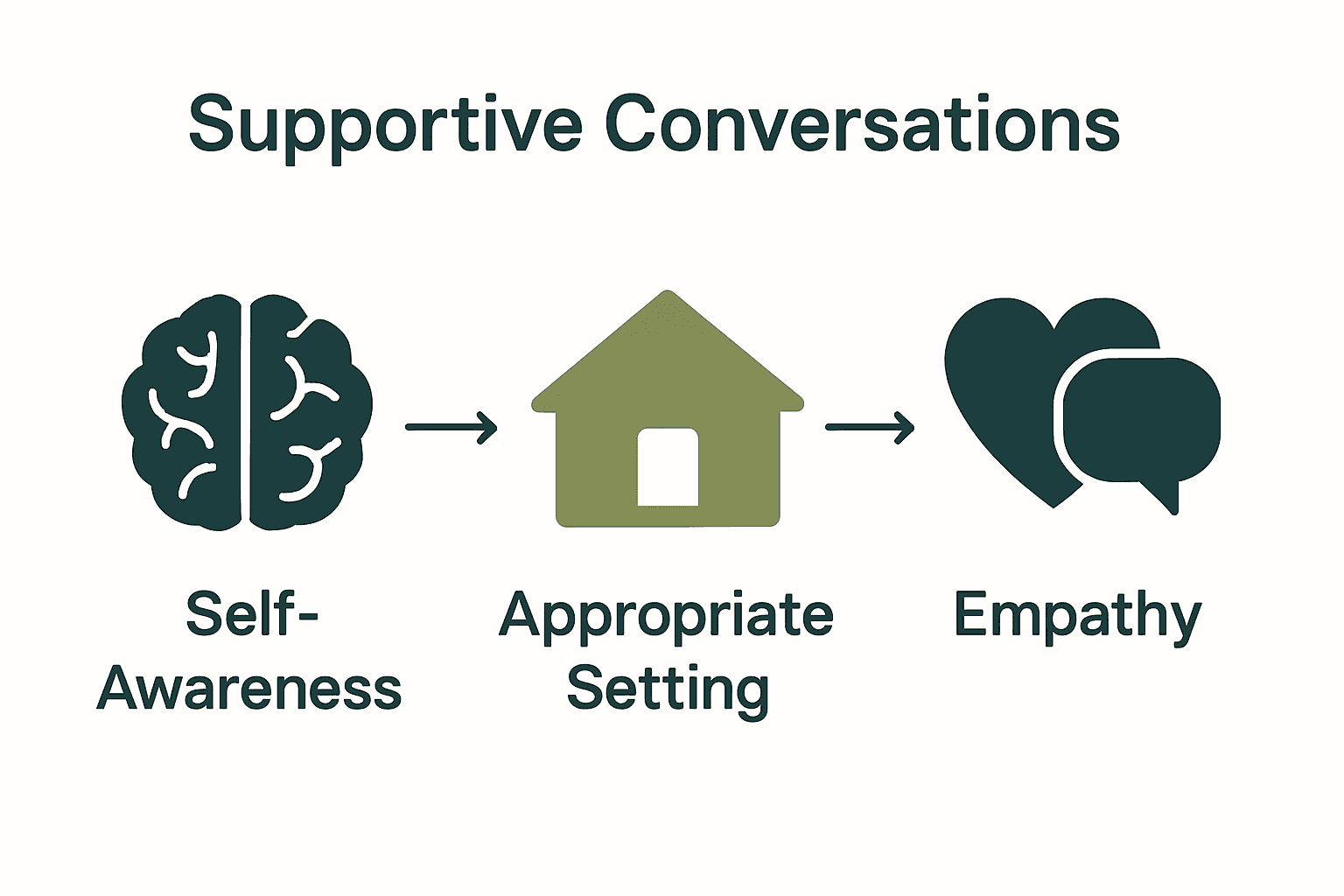
Here’s a summary of key strategies for each conversation step:
| Step | Main Focus | Key Strategies |
|---|---|---|
| Assess Mindset | Self-awareness | Reflect on emotions Practice emotional regulation Clarify motivation |
| Choose Setting | Environment | Pick private, calm place Consider timing Minimize distractions |
| Express Empathy | Communication style | Use person-first language Avoid judgment Validate feelings |
| Listen Carefully | Connection | Ask open questions Practice active listening Use reflective statements |
| Encourage Help | Action & Support | Explore treatment options Offer resources Acknowledge small steps |
Step 3: Express Empathy and Avoid Judgment
Communicating with someone struggling with addiction requires a delicate balance of compassion and understanding. This step will help you approach the conversation with genuine empathy while steering clear of harmful judgment.
Language matters deeply. According to the National Institute on Drug Abuse, using person-first language can significantly reduce stigma. Instead of labeling someone as an “addict,” speak about them as a “person with a substance use disorder.” This subtle shift acknowledges their humanity and separates the person from their struggle.
Practice active listening without interrupting or offering immediate solutions. Your role is to create a safe space where they feel heard and understood. Validate their feelings by reflecting back what you hear. Phrases like “I can see this is really difficult for you” or “I hear how much you’re struggling” can demonstrate profound emotional support.
Recognize that addiction is a complex health condition, not a moral failing. Avoid using language that sounds accusatory or suggests weakness of character. Your words should communicate that you see them as a whole person deserving of compassion and support.
Pro Tip: Use “I” statements that express concern without placing blame. “I’m worried about you” works better than “You need to stop using.”
Remember that empathy is about understanding their experience without trying to fix everything immediately. Your genuine care and nonjudgmental approach can be the first step toward helping them consider seeking professional support.
In the next step, we will discuss how to clearly express your concerns while maintaining a supportive tone.
Step 4: Use Supportive Language and Listen Carefully
Communicating effectively with someone struggling with addiction requires more than just speaking words. This step focuses on creating a genuine connection through intentional listening and compassionate communication.
According to SAMHSA, the key is using open-ended questions that invite deeper conversation. Instead of asking “Do you use drugs?” try “How are you feeling about your current situation?” These questions create space for honest reflection and demonstrate that you are genuinely interested in understanding their experience.
Johns Hopkins University recommends practicing active listening techniques. This means fully concentrating on what they are saying without planning your response or jumping to conclusions. Pay attention to their tone, body language, and emotional undertones.
Practice reflective listening by periodically summarizing what you hear. Phrases like “It sounds like you’re feeling overwhelmed” or “I hear that you’re struggling with some difficult emotions” show you are truly hearing them. This technique validates their feelings and helps them feel understood.
Pro Tip: Maintain open and non-threatening body language. Sit at a comfortable distance, make gentle eye contact, and keep your posture relaxed to help them feel safe sharing.
Remember that listening is about creating a judgment-free zone where they feel safe expressing themselves. Your goal is not to fix their problem immediately but to offer genuine support and understanding.
In the next step, we will discuss how to offer specific help and resources without overwhelming them.
Step 5: Encourage Professional Help and Next Steps
The final stage of your conversation involves guiding your loved one toward professional support and creating a compassionate roadmap for recovery. This step transforms your empathetic dialogue into actionable steps toward healing.
According to the National Institute on Alcohol Abuse and Alcoholism, the key is collaborative exploration of treatment options. Approach this discussion as a partnership. Ask questions like “What kind of support do you feel might work best for you?” This demonstrates respect for their autonomy and increases their likelihood of engagement.
Montclair State University’s guidance emphasizes acknowledging even small steps toward change. Recognize their willingness to have this conversation as a significant first move. Offer to help research treatment centers, accompany them to initial consultations, or simply provide emotional support during their journey.
Present treatment options without pressure. These might include individual therapy, group counseling, intensive outpatient programs, or medical interventions. Highlight that seeking help is a sign of strength. Share stories of successful recovery if you know them, but avoid comparisons that might feel minimizing.
Pro Tip: Have a few concrete resource contacts ready. Local treatment centers contact information or helpline numbers can make the next steps feel more tangible and less overwhelming.
Remember that recovery is a process. Your role is to offer consistent support, not to control their journey. Be patient and continue showing compassion, even if progress seems slow.
Learn more about supporting loved ones through mental health challenges with our guide on navigating adult mental health programs.
Finding the Right Words and Support to Help Your Loved One
Starting a conversation with someone struggling with addiction can be emotionally overwhelming. The article highlights how difficult it is to approach such talks with empathy, active listening, and a nonjudgmental attitude while also encouraging professional help. If you have struggled to find the right words or wonder how to turn your concern into meaningful action, you are not alone. Addiction is complex, and having compassionate, expert guidance can make all the difference in supporting lasting recovery.
You do not have to face this challenge on your own. At Glendora Recovery Center, we specialize in working with adults and teens facing substance abuse and co-occurring disorders. Our caring team offers tailored programs including Partial Hospitalization and Intensive Outpatient options designed to meet your loved one’s unique needs. Whether you want advice on starting the conversation or are ready to explore treatment plans, our knowledgeable staff is here to help every step of the way.
Take the first step toward healing today by visiting our Contact Us page. Learn how to navigate this difficult journey with the right support by exploring our mental health resources and speaking confidentially with our team. Your loved one deserves a hopeful future and you deserve peace of mind. Reach out now and turn compassion into action.
Frequently Asked Questions
How can I prepare myself emotionally to talk to an addict?
Understanding your own feelings about addiction is essential. Reflect on your emotions and practice techniques like deep breathing or meditation to center yourself before the conversation.
What should I consider when choosing a time to talk to someone struggling with addiction?
Select a time when the person is sober and in a calm mood. Aim for a moment free from distractions, such as during a quiet afternoon, to ensure they feel secure and open to dialogue.
How do I start a supportive conversation about addiction?
Begin the conversation with empathy and avoid judgmental language. Use phrases that express concern, such as “I’m really worried about you,” to set a supportive tone.
What language should I avoid when discussing addiction with someone?
Steer clear of accusatory or labeling language that stigmatizes. Instead of calling someone an